After making something from solid wood, the final question is what to apply. Broadly speaking, there are two paths: oil that soaks into the wood and varnish that leaves a hard film on top. Both make the wood look darker and more lustrous, but they feel different to the touch and require different care.
Oil That Soaks In
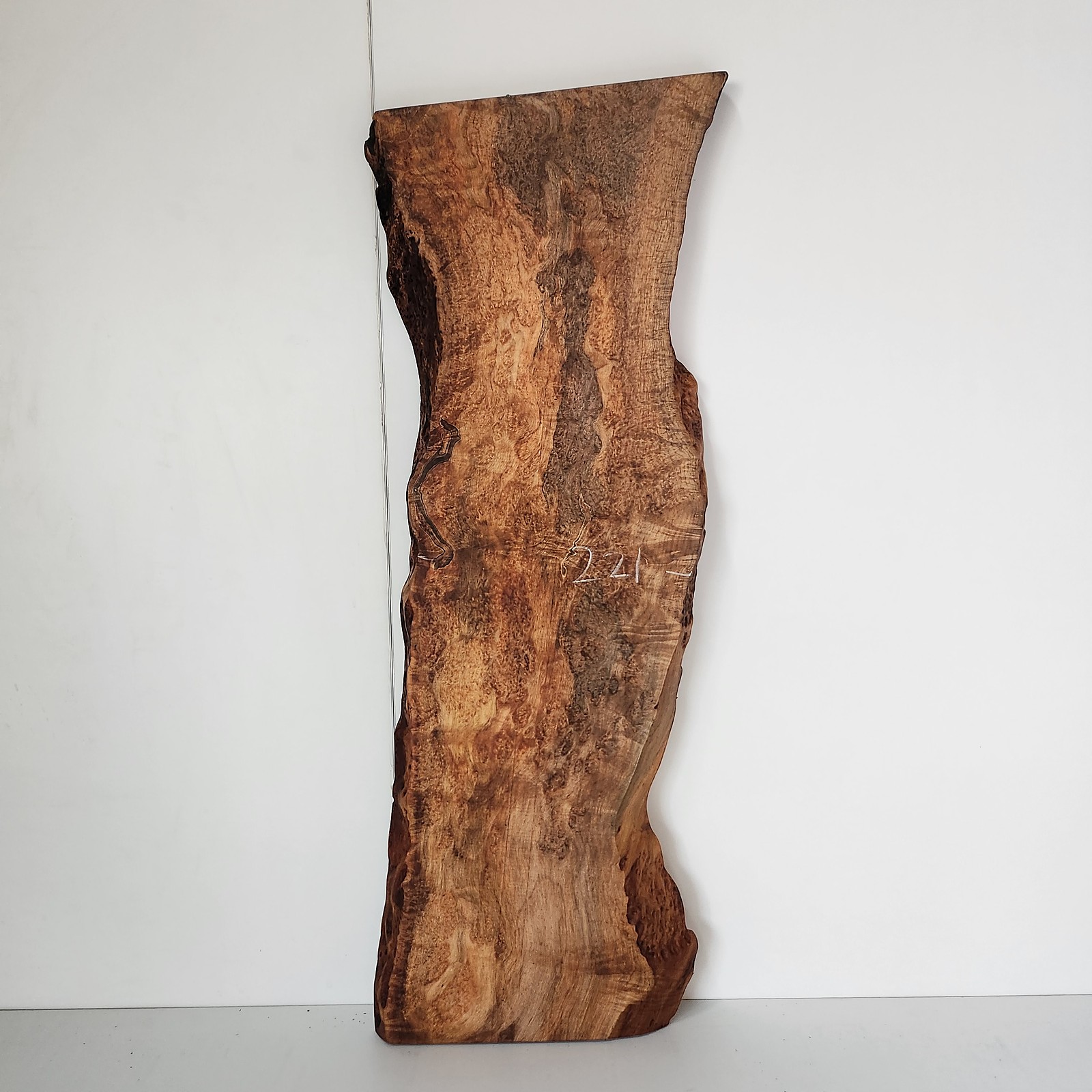
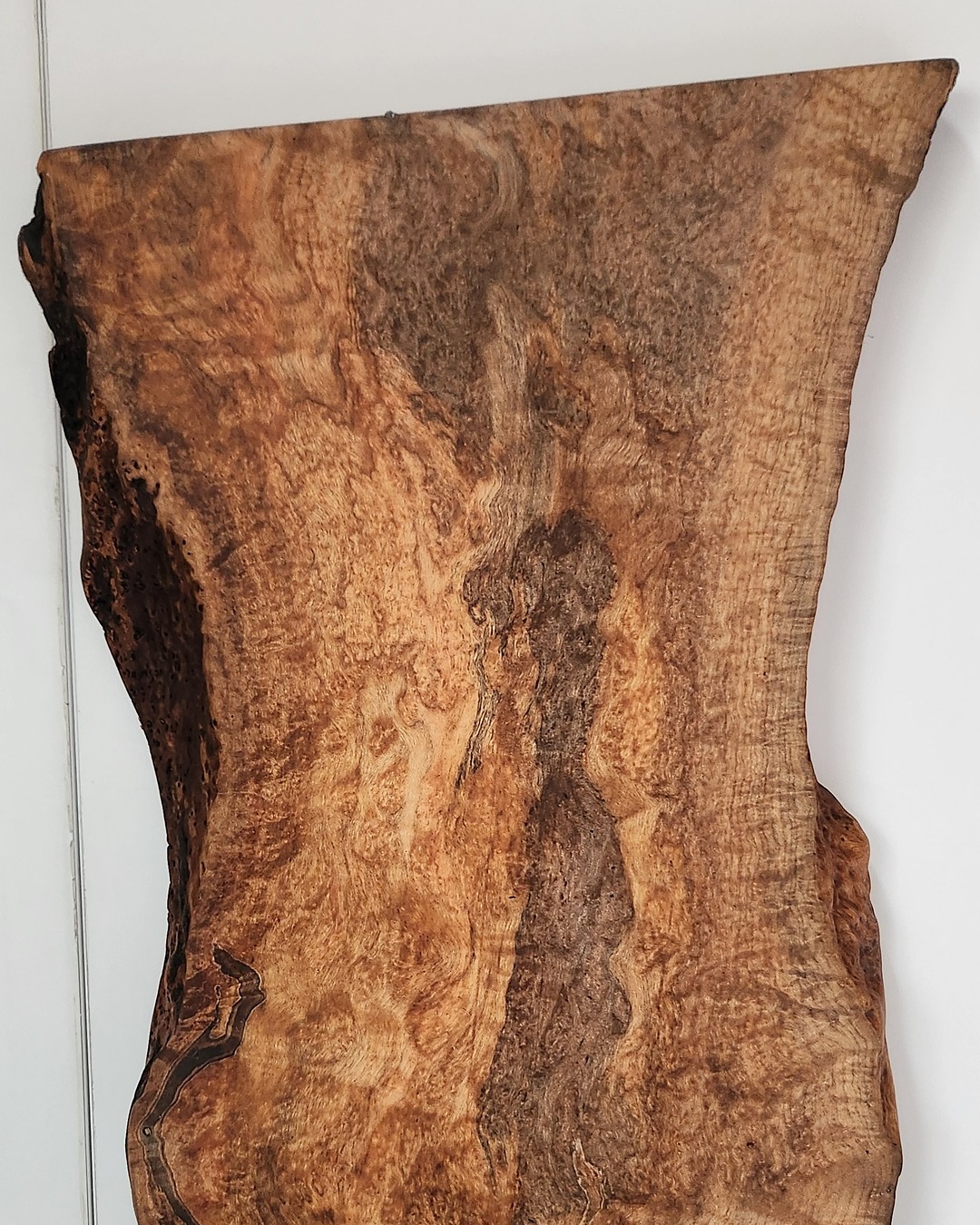
The Maple Burl board (No. 2176) that Woodway posted as having a “sanding oil finish” is a natural board measuring 741 mm long and 25.5 mm thick. A burl is a swollen, knot-like growth on a tree trunk. When this area is sawn, the grain does not flow in one direction; instead, it forms a pattern of clustered small dots and swirls. Oil soaks in between these fibers. The color becomes one shade darker, like wood when it is wet, and each dot and curve in the grain becomes more distinct. Because no thick film forms on the surface, you can still feel the wood grain when you run your hand over it.
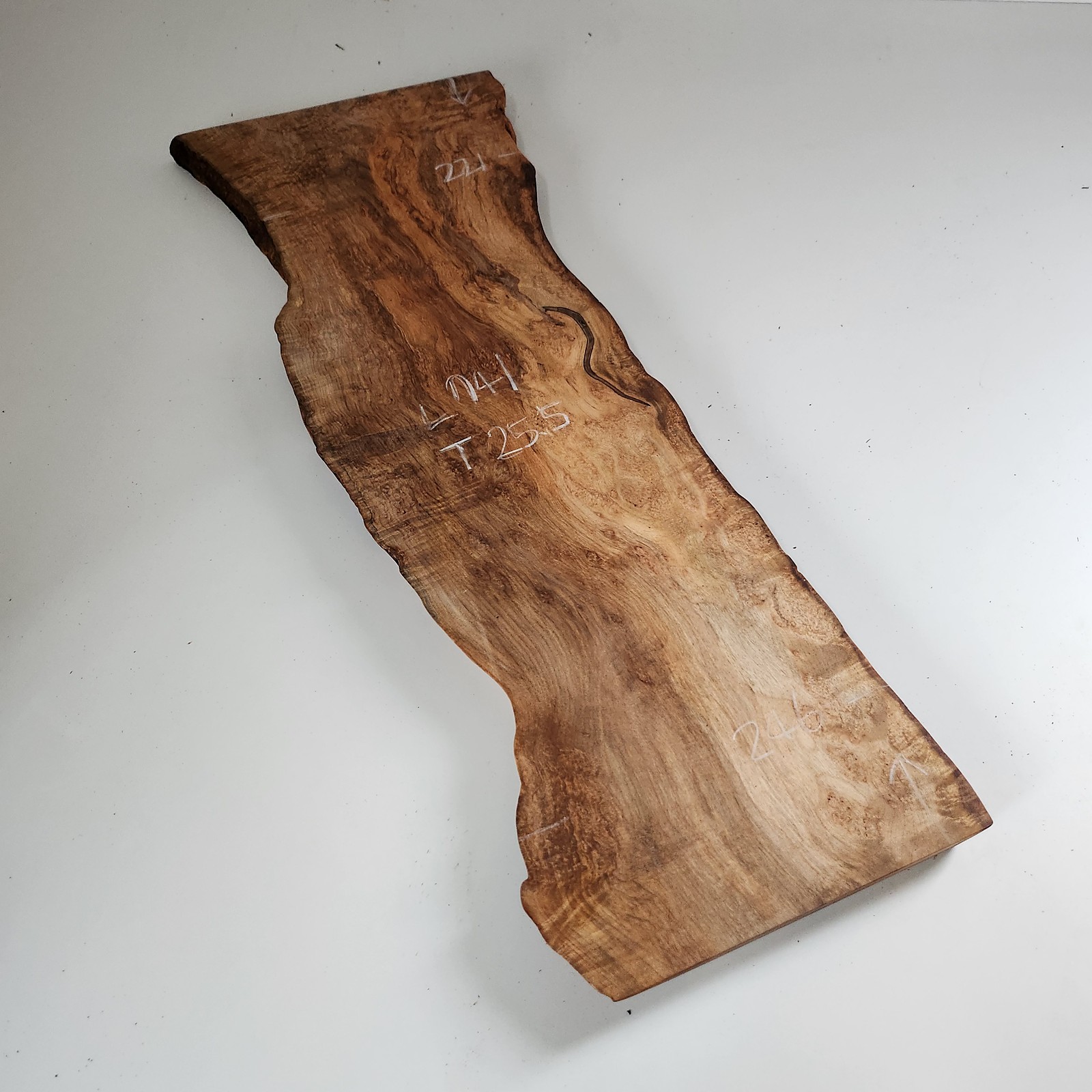
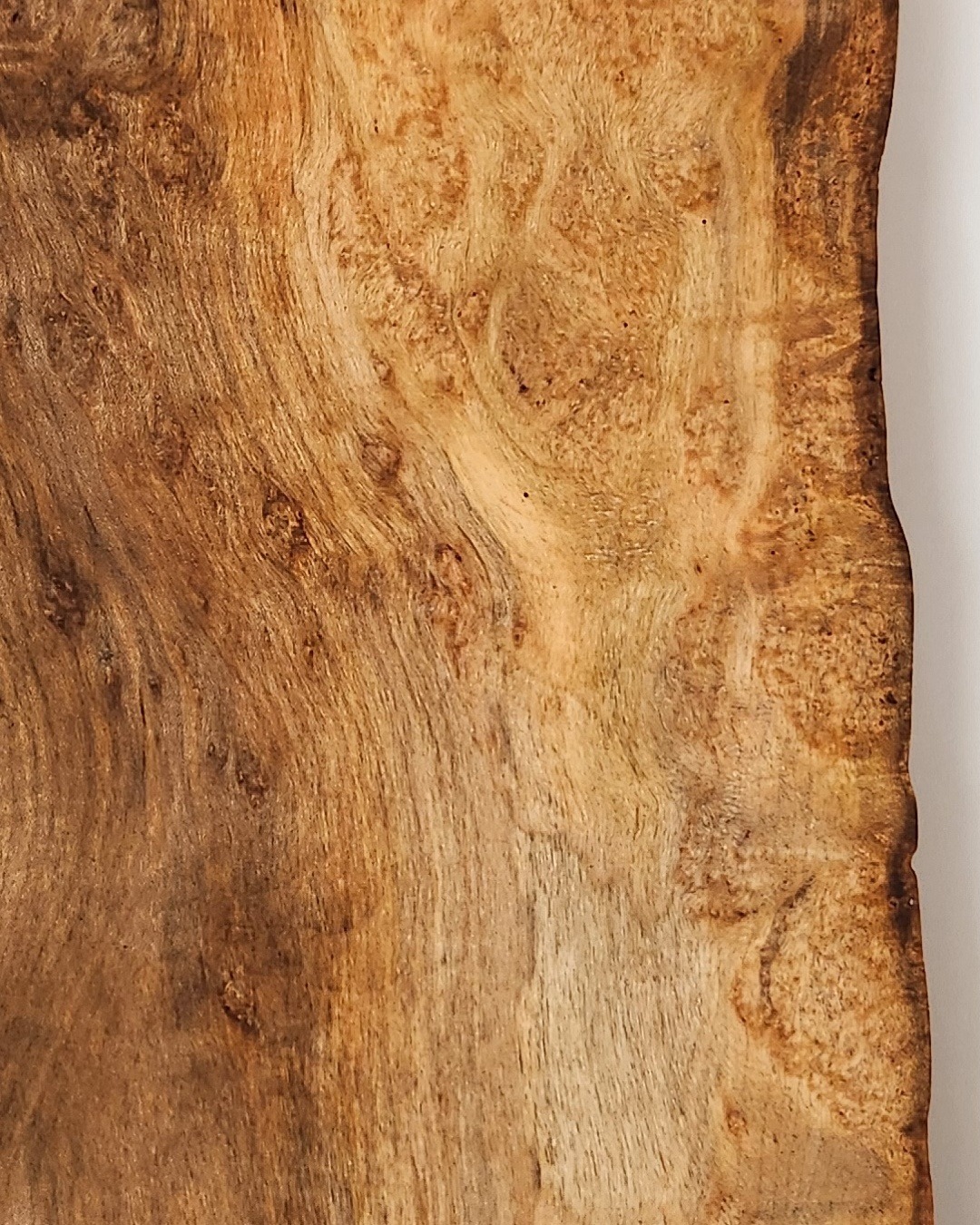
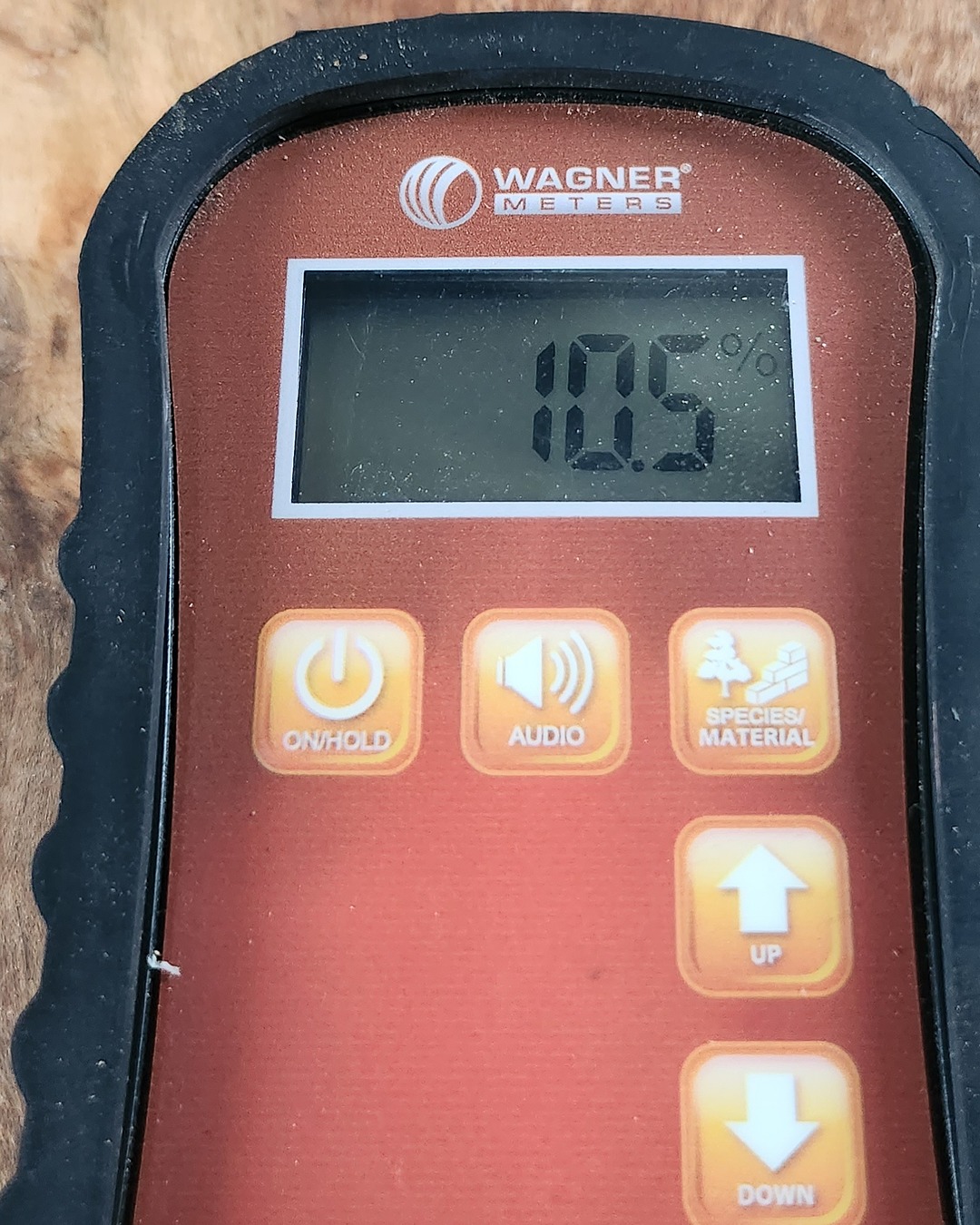
When the board is turned over, a dark brown band runs through the center, with more reddish coloring. The two sides of the same board look this different. Finally, a moisture meter showed 10.5%. Whether using oil or varnish, the basic rule is to finish wood only after it has dried thoroughly.
Varnish That Stays on Top
Varnish, by contrast, creates a hard film on top of the wood. Since the film takes the brunt of water and stains, it is easy to maintain in places where moisture and spills are common, such as a dining table or desk top where water glasses are often set down. You can also choose the level of sheen. However, when the film is scratched or peeled, it is difficult to touch up only that spot; for a clean result, you need to sand it down and apply the finish again. Oil can be reapplied when it wears away or its color fades, but it offers less protection against water and stains than a finish that creates a film, so it needs to be reapplied from time to time.
Before and After Application
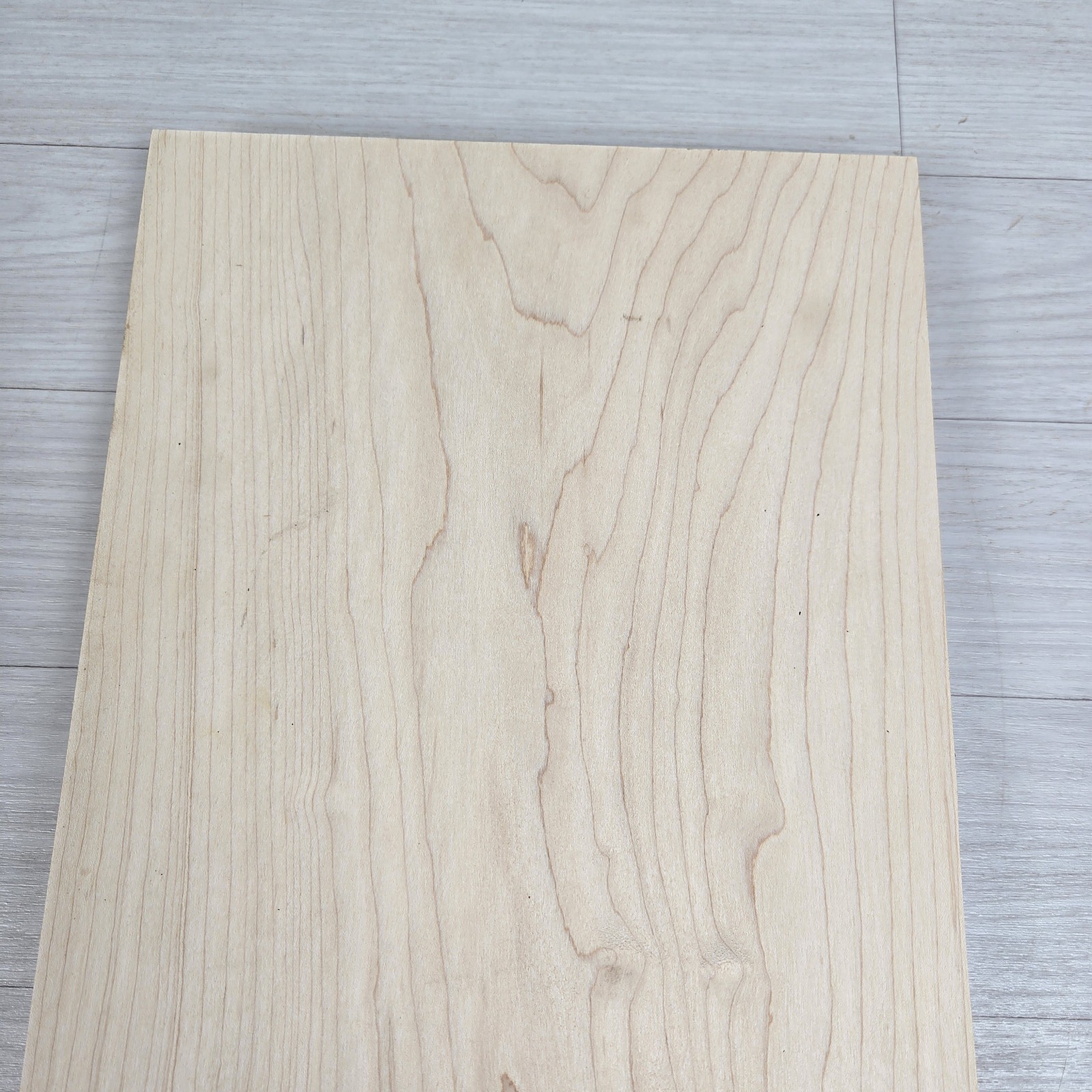
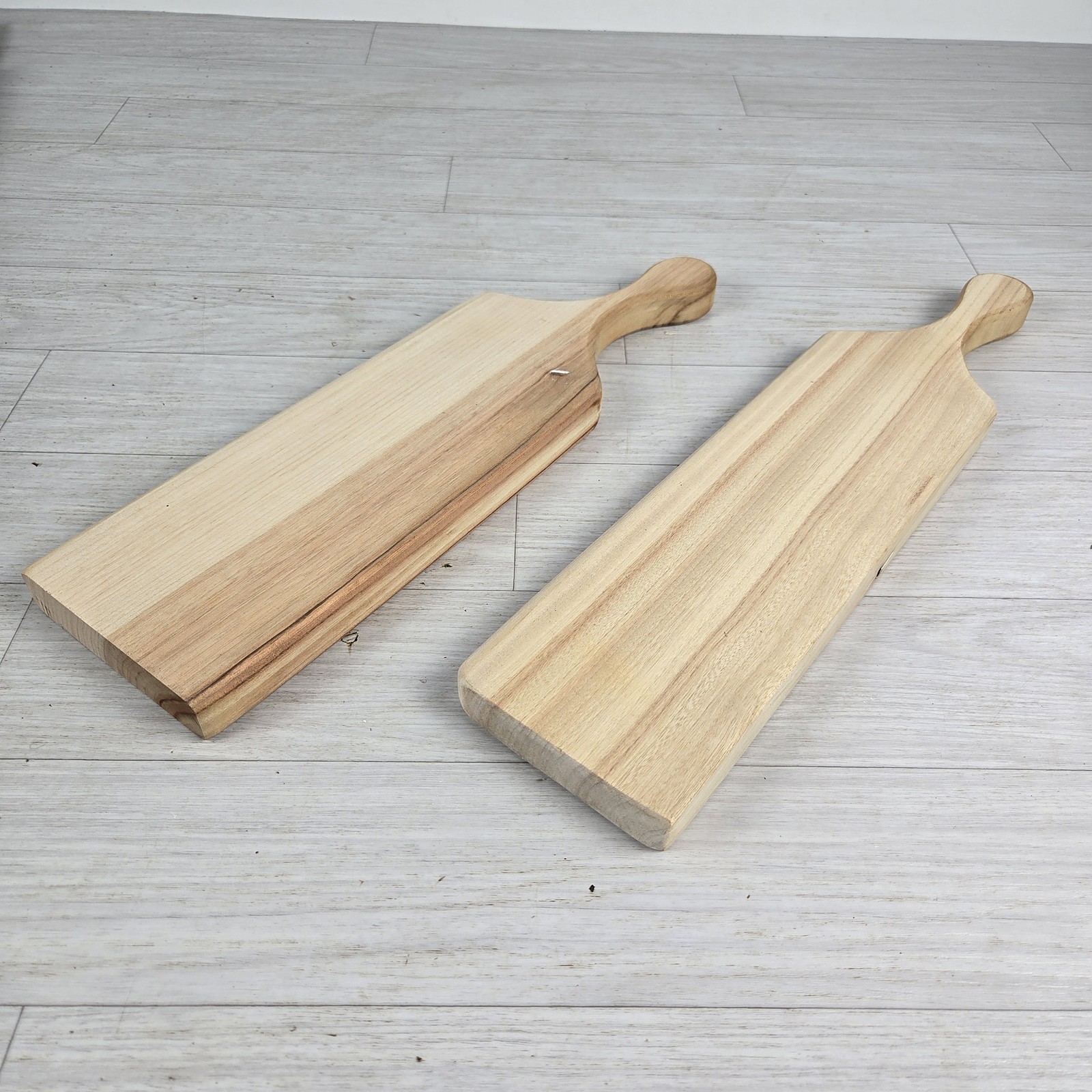
The camphor partially finished cutting-board blank (No. 4392), listed as “completed with sanding oil only” in its product name, is still bare wood with nothing applied. Its handle shape has already been formed, so it can be used after one more sanding and an application of oil. It is currently light in color, but once it absorbs oil, this surface will also become one shade darker and the stripes between the grain will become more distinct.
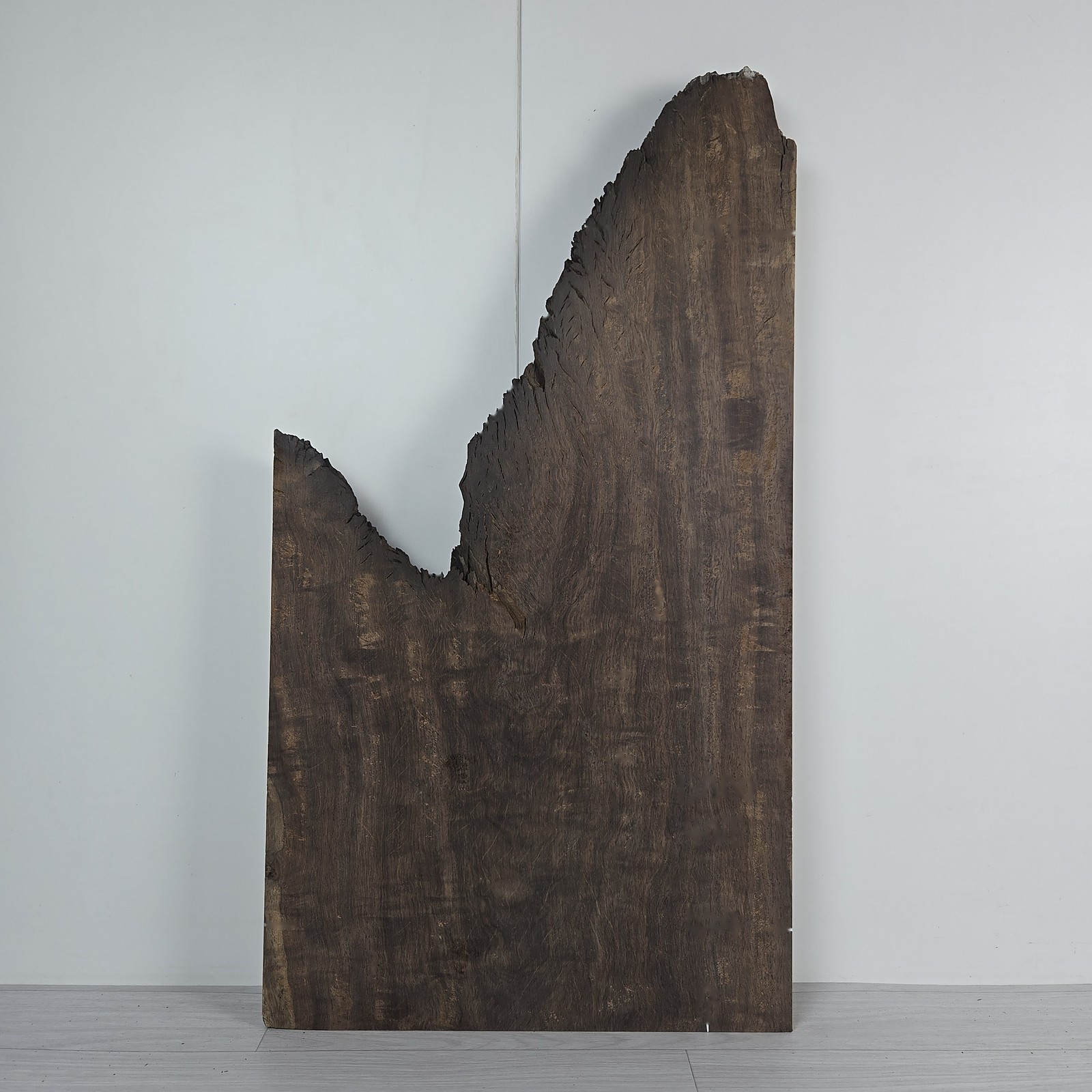
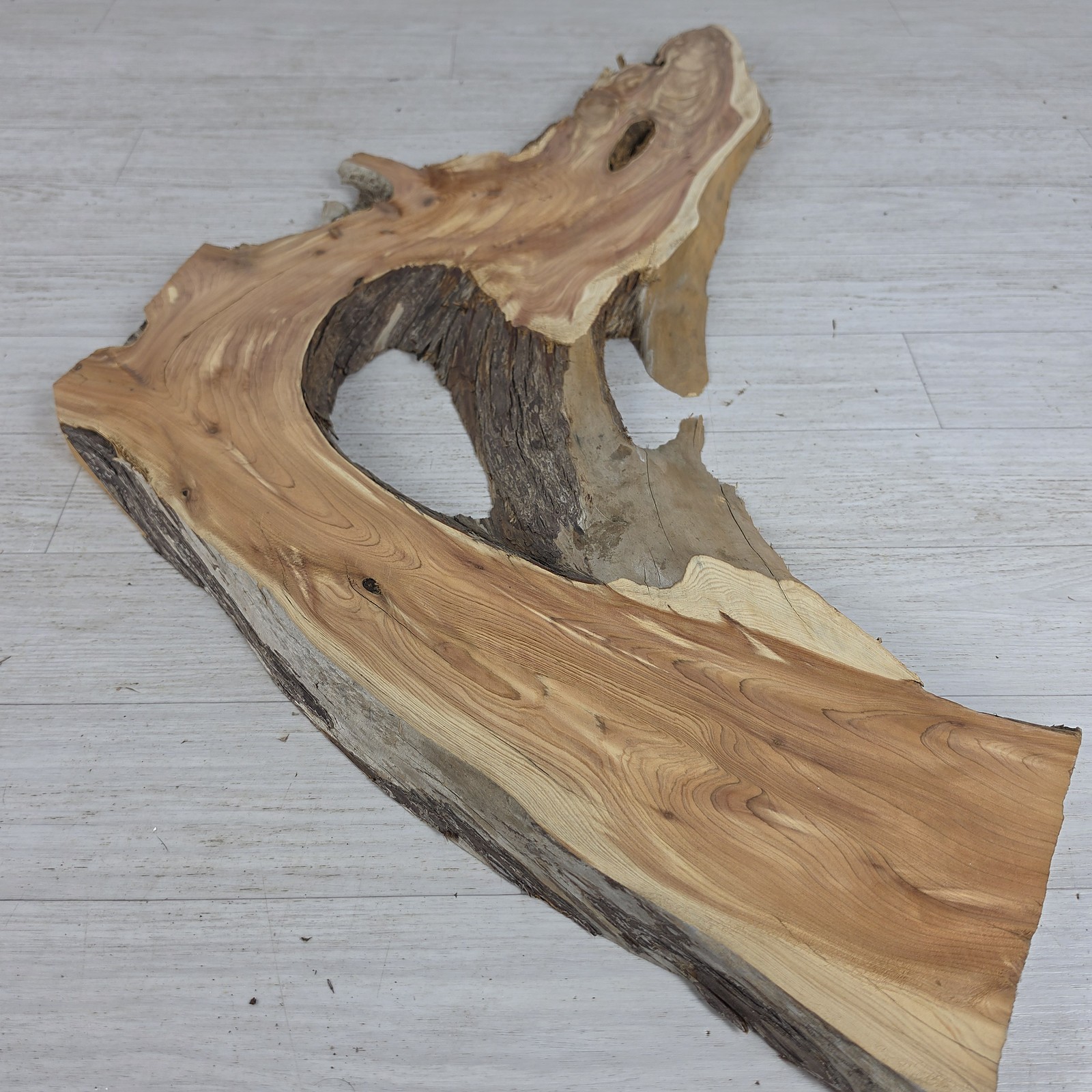
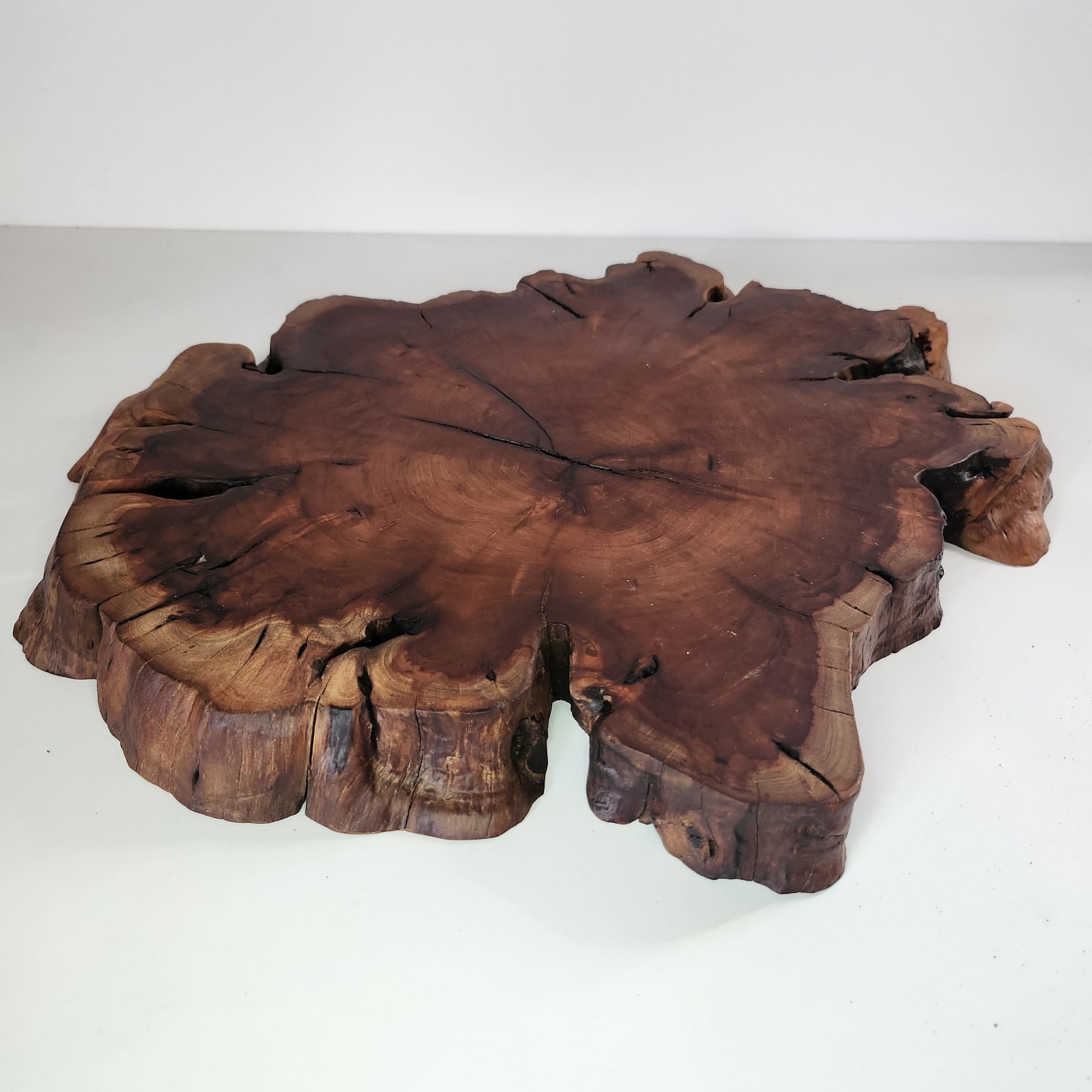
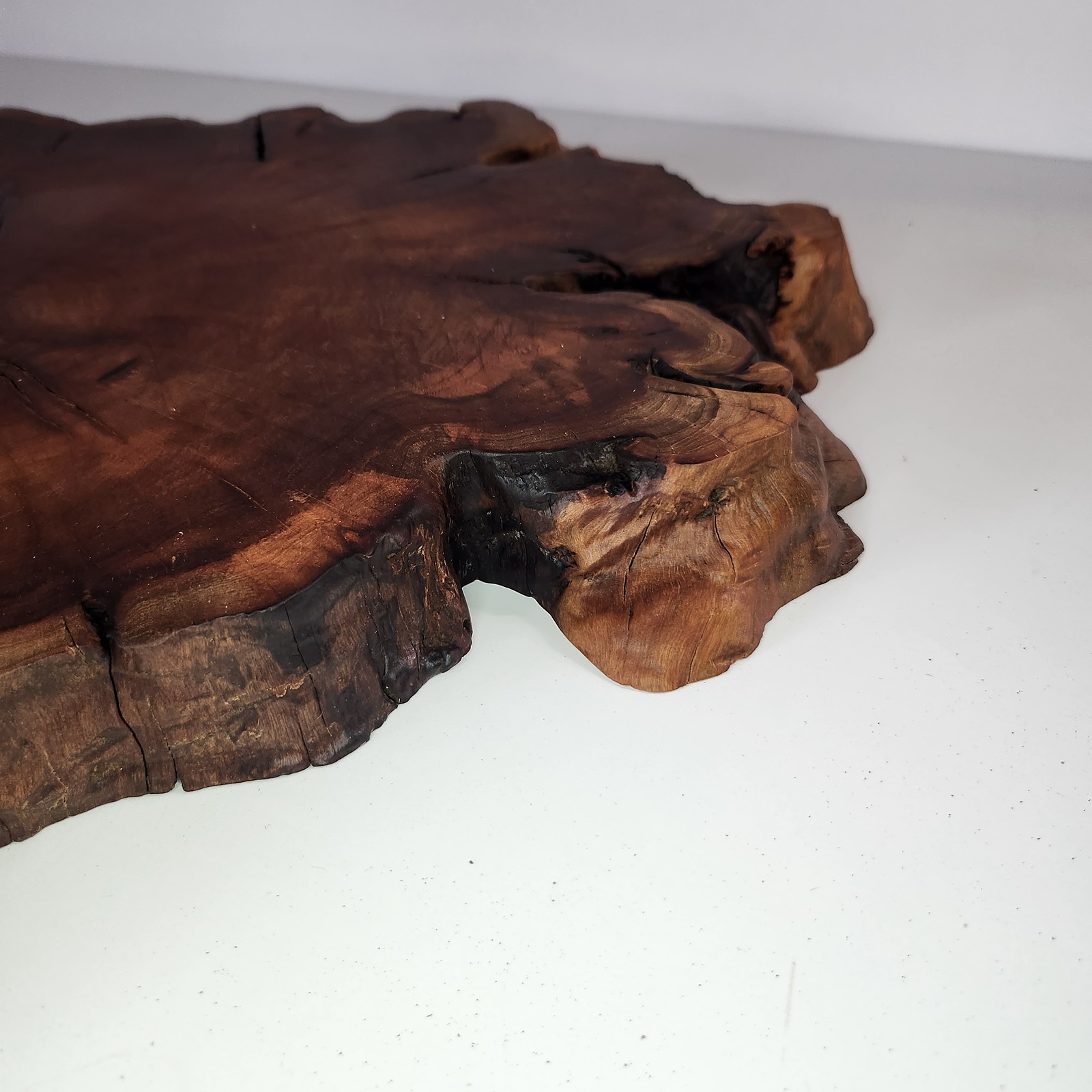
The jujube round slice (No. 2246), which was posted as having a “sanding oil finish completed,” shows what it looks like after application. The boundary between the deep reddish-brown center and the lighter outer area is distinct, while the edge on the bark side retains its naturally uneven shape.
What Should You Choose?
For small items and trays where you want to preserve the feel of the wood, oil is convenient. For table tops where water glasses and spills are common, varnish—the film-forming finish—is more practical. On surfaces that come into contact with food, such as cutting boards, use an oil made for food-contact applications. Whichever you choose, it is safest to apply a small amount to an inconspicuous area first, check how the color changes, and then begin.
For more on oils used on cutting boards, continue with “Oil for Cutting Boards: Why Choose Mineral Oil,” and for choosing wood for cutting boards, see “Good Woods for Cutting Boards and Woods to Avoid.”